
National University Turns 34, but Graduates Continue to Struggle for Jobs
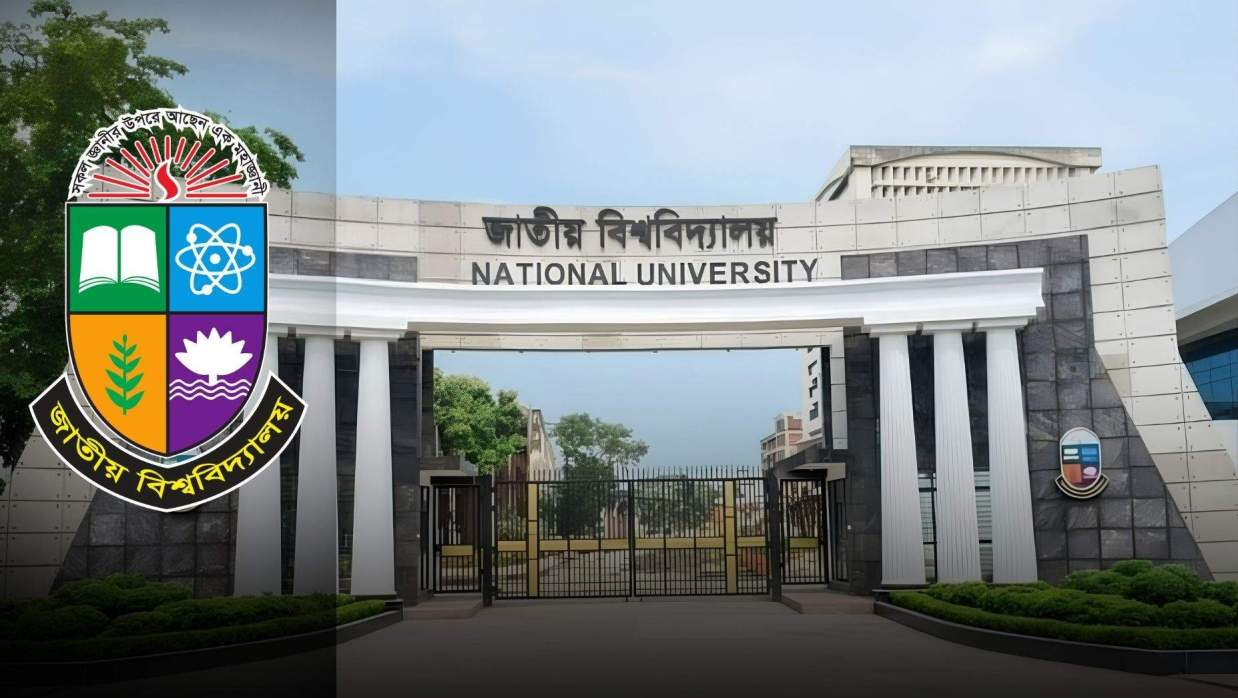
National University has completed 34 years since its establishment, expanding access to higher education for millions of students across Bangladesh. The university plays a significant role in providing undergraduate education to young people, including those from remote areas who might otherwise struggle to pursue higher studies.
However, its long journey has also been marked by persistent challenges, including session delays, concerns over education quality, limited opportunities to develop practical and job-oriented skills, delays in publishing examination results and high unemployment among graduates. Although some of these problems have eased since Professor ASM Amanullah took office as vice-chancellor, many graduates continue to face uncertainty and frustration as they struggle to find suitable employment after completing their degrees.
Wednesday (October 21) marks the 34th anniversary of National University. The institution was established through a gazette notification issued on October 21, 1992, following the passage of National University Act No. 37 in parliament on October 20 that year.
Established under the leadership of then prime minister Khaleda Zia, the university has played a major role in expanding higher education opportunities for students from middle-income, lower-middle-income and marginalised families. However, questions remain over whether the expansion has been matched by improvements in educational quality, skills development and employment outcomes.
According to information provided by Taiyeba Tasnim Siraj, acting director of the university's public relations office, around four million students are currently enrolled at 2,318 colleges and educational institutions affiliated with National University. More than 100,000 teachers work at these institutions.
Nearly 70 per cent of the country's higher education is delivered under the university's system. More than 10 million students have graduated from the institution, many of whom now work in education, administration, business, industry, technology and social development at home and abroad.
Despite its experience in managing such a vast education system, National University continues to face questions over the quality of education and the preparation of students for the workplace.
Students complain that many affiliated colleges offer limited opportunities to develop personal and professional skills beyond classroom learning. They cite a lack of effective clubs, regular presentations, communication skills programmes and extracurricular activities that could help students build both hard and soft skills.
Some students say that peers at public universities often have opportunities to participate in presentations, group projects, debates, research and other extracurricular activities. Students at many National University-affiliated colleges, they argue, are deprived of similar experiences.
As a result, even graduates with strong academic results may struggle with important workplace skills, including performing in job interviews, communicating professionally, leading teams and solving practical problems.
“National University is called a factory for producing unemployed graduates, but that is not the reality. Its students are working in various sectors at home and abroad. They also contribute to increasing the country's remittances. Major reforms are underway in the university's curriculum and syllabus to make students more employable.”
Professor ASM Amanullah, Vice-Chancellor of National University
Students also say that although two presentations are supposed to be held each year, the requirement is often not implemented effectively. They argue that the lack of meaningful initiatives to develop skills beyond the formal curriculum leaves many graduates inadequately prepared for a competitive job market.
The socioeconomic circumstances of National University students make these concerns particularly significant. A research report found that 43 per cent of the university's students come from families with monthly incomes below Tk 10,000. Another 49 per cent belong to families earning between Tk 10,000 and Tk 40,000 a month.
This means 92 per cent of students in the study came from families with monthly incomes below Tk 40,000. Six per cent belonged to families earning between Tk 41,000 and Tk 60,000, while only 2 per cent came from households with monthly incomes exceeding Tk 60,000.
These figures highlight the financial constraints faced by many students. For those from disadvantaged backgrounds, paying for additional training, technical skills development, language courses or job preparation alongside their studies can be difficult.
This makes it particularly important for the university to provide skills development opportunities alongside academic instruction. Students, however, say initiatives in this area remain inadequate.
Concerns over funding and unequal opportunities
Public expenditure per student is another issue in discussions about the quality of National University's education. According to information from the University Grants Commission (UGC), government spending per student at National University has been cited at only Tk 1,151, compared with several lakh taka per student at other public universities.
The reported disparity raises questions about educational quality and equality of opportunity. Given the number of students it serves, National University needs adequate funding, teacher training, modern learning materials, research opportunities and technology-based education.
Students say the lack of expected progress in these areas means many of them obtain degrees without developing the skills needed to compete in the job market.
Some students also allege that employers hold negative perceptions of National University graduates. They say certain recruiters form unfavourable opinions about their qualifications after seeing the university's name on their CVs.
Although an individual's ability and skills cannot be determined solely by the institution they attended, such experiences can discourage students. Addressing the problem requires ensuring that graduates leave university with practical skills, relevant training and workplace-ready knowledge alongside their degrees.
Students further complain of difficulties involving form-fill-up schedules, session fee arrangements, examination timetables and result publication. Allegations include inconsistencies in examination script evaluation, unexpected errors in results and lengthy waits for corrections.
Dissatisfaction has also been reported over long gaps between convocation ceremonies and what some students describe as a lack of commitment among certain teachers.
The consequences extend beyond academic life. Delays in examinations and results can disrupt applications for further studies, job opportunities and plans to study abroad. For students from financially disadvantaged families, waiting an additional year or two can place further pressure on their households and increase the risk of missing employment opportunities.
BIDS study finds unemployment rate of 28.24 per cent
Concerns over education quality and employment prospects are underscored by a study conducted by the Bangladesh Institute of Development Studies (BIDS).
The research on unemployment among college graduates was presented by BIDS Research Director SM Zulfiquar Ali at the institute's annual development conference at a hotel in Dhaka on December 9 last year.
The study found that the unemployment rate among National University graduates stood at 28.24 per cent. A substantial proportion of those who were employed worked in low-income occupations. Unemployment was comparatively higher among women and students from rural areas.
The research covered 61 colleges affiliated with National University and included 1,340 graduates, 670 current students, 61 college principals and 100 employers. The study also referred to a total of 608 colleges under National University across the country, including public and private institutions.
The findings showed that business studies, humanities and social sciences account for a large share of enrolment at affiliated colleges. Students in science-based subjects made up 3.82 per cent of undergraduate enrolment and 3.10 per cent of postgraduate enrolment.
By comparison, 44.26 per cent of students had graduated in business studies. Among graduates from the colleges covered by the study, 42.29 per cent worked as salaried employees and 16.24 per cent had become entrepreneurs. Around 36 per cent of those surveyed were employed in teaching, followed by positions such as officers and assistant officers.
The study also found that women and rural students faced greater difficulties finding employment. Unemployment was higher among students who had completed their SSC through the general education system before earning their degrees. Those who had entered higher education after technical education or through the Dakhil examination had comparatively lower unemployment rates.
Subject-based analysis showed higher unemployment among graduates of BA pass courses, political science, library management, Bengali, and Islamic history and culture. Graduates in English, economics, accounting, sociology, and finance and banking had comparatively lower unemployment rates.
The research also identified a gap between graduates' employment aspirations and actual outcomes. Some 43.13 per cent of graduates from the colleges surveyed wanted to work in government jobs.
The study identified several problems at affiliated colleges, including shortcomings in education quality, low student attendance, inadequate incentives and training for teachers, and a mismatch between education and labour-market demands.
Vice-chancellor says curriculum reforms are underway
National University Vice-Chancellor Professor ASM Amanullah has rejected the criticism that the institution primarily produces unemployed graduates, pointing instead to its alumni's contributions across different sectors.
Speaking at a SIM card distribution programme titled “Connecting Every Campus”, jointly organised by National University and Grameenphone at the auditorium of Siddheswari College in Dhaka on October 14, Amanullah said the university's graduates were working in various sectors at home and abroad and contributing to the country's remittance earnings.
He said major reforms were underway in the university's curriculum and syllabus to make students more competitive in the job market. The curriculum was being redesigned to help graduates demonstrate their abilities in recruitment processes, while the university was also placing greater emphasis on enabling students to earn from home by applying their skills rather than relying solely on conventional jobs.
Detailing the progress of the reforms, Amanullah said the syllabus for second-year honours courses had been uploaded following validation. Around 5,000 courses across approximately 50 subjects are being reviewed, and reforms to 400 courses have been completed.
He expressed hope that the validation of the pass-course syllabus would be completed and the revised version uploaded within the next two weeks.
The vice-chancellor also stressed the importance of information and communication technology skills. He said teachers were receiving ICT training and that the university would take initiatives to establish ICT laboratories at colleges that do not yet have them.
 Follow The Daily Campus on Google News