Campuses Fall Back into Power Politics as Escalating Clashes Spark Fear of Armed Unrest
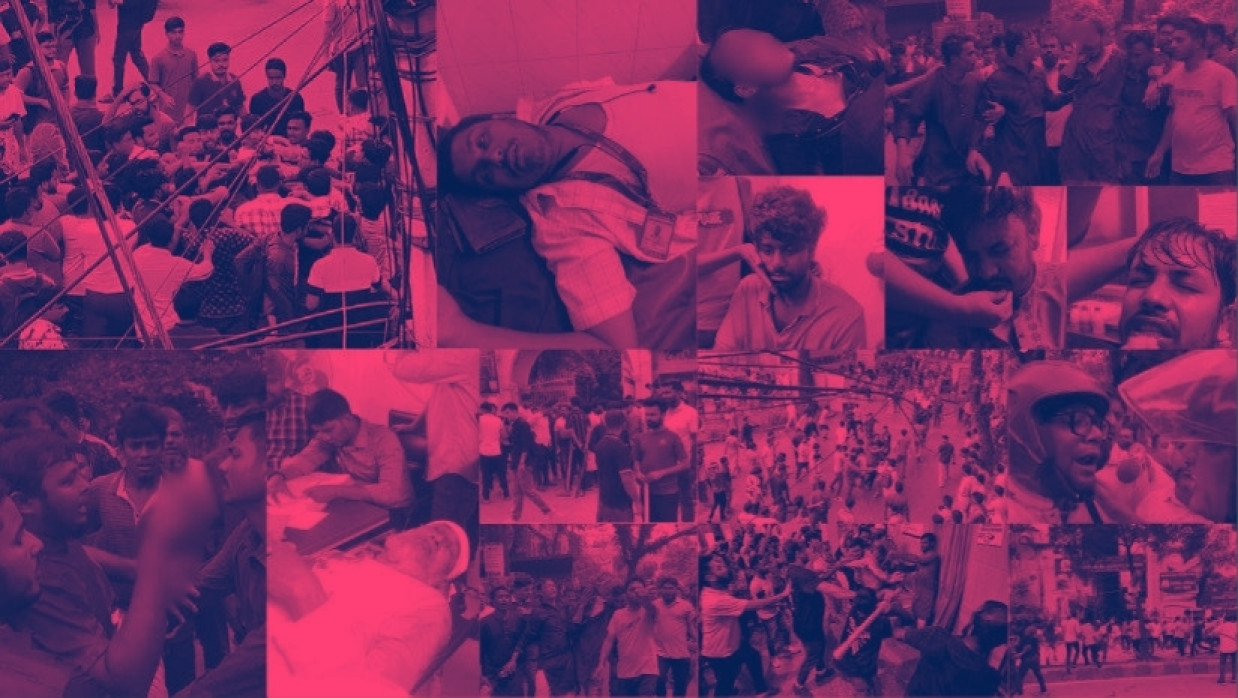
Expectation for a new political culture defined by tolerance, democratic practice, and peaceful coexistence among Bangladesh's youth following the July Mass Uprising is increasingly colliding with campus reality. A surge in violent confrontations, hall occupations, and muscle-flexing among student organizations across multiple universities has raised widespread concern over a potential return to armed campus politics.
Despite the spirit of the July movement demanding campuses free from partisan dominance, analysts and observers note that student politics is reverting to old patterns of control. Over recent months, clashes triggered by committee formation, hall dominance, tender rivalries, and individual disputes have led to the widespread use of sharp weapons, sticks, and improvised arms.
Multi-Campus Confrontations Across Dhaka and Beyond
The recent wave of violence reached a peak on Tuesday (August 4) when activists from Jatiyatabadi Chhatra Dal (JCD) and Bangladesh Islami Chhatra Shibir engaged in intense clashes at Jagannath University (JnU). Markings the largest confrontation between the two organizations since the uprising, the violence quickly spread to neighboring institutions in Old Dhaka, including Kabi Nazrul Govt. College and Govt. Shaheed Suhrawardy College, before infecting Dhaka College and Government Alia Madrasah.
The unrest continued on Wednesday (August 5) with reports of renewed skirmishes at Govt. Titumir College in Dhaka and Barishal University. These follow earlier clashes on Monday at Begum Rokeya University (BRUR) in Rangpur, leaving over fifty student activists and leaders injured across three days of multi-campus turbulence.
The Jagannath University Flashpoint
The trigger for Tuesday's widespread violence occurred during a documentary screening and discussion titled "July Mass Uprising Day 2026" at the JnU Central Auditorium, where University Grants Commission (UGC) Chairman Prof. Mamun Ahmed was attending as chief guest. Representatives from the Jagannath University Central Students' Union (JnUCSU), Jatiya Chhatra Shakti, and Inqilab Mancha attempted to enter displaying placards demanding the transfer of second-campus construction to the Bangladesh Army, accelerated implementation of temporary housing in Keraniganj, and improved medical services.
When JCD leaders and the proctorial body barred their entry, demonstrators staged a sit-in outside. Following the seminar, JCD activists attacked JnUCSU Social Welfare Secretary and JnU Shibir Publication Secretary Mostafizur Rahman near the Shahid Minar, initiating a campus-wide brawl. Fleeing activists were subsequently pursued and assaulted inside the university medical center and at Dhaka National Medical Institute Hospital, while Samajtantrik Chhatra Front leaders protesting the violence were also beaten outside the campus gates.
The conflict escalated further at Government Alia Madrasah, where JCD and Shibir activists clashed over hall room occupation. Eyewitnesses reported that local Jubo Dal and BNP activists subsequently joined JCD in raiding Allama Kashgari (Rh.) Hall, vandalizing multiple rooms under Shibir control and assaulting the madrasah principal, Obaidul Haq.
Shift in Campus Power Dynamics
The post-uprising landscape altered significantly following the banning of Bangladesh Chhatra League (BCL), which had monopolized university campuses prior to the fall of the Awami League government on August 5, 2024. In subsequent student union elections across five major public universities—Dhaka, Chittagong, Jahangirnagar, Rajshahi, and Jagannath—Shibir-backed panels secured majorities, while JCD suffered significant electoral setbacks.
JCD leadership contends that Shibir built its organizational strength covertly under BCL protection during the previous regime while JCD activists were forcibly kept off campuses, preventing them from connecting with general students. As a result, JCD has actively sought to assert control on campuses, leading to frequent confrontations whenever political issues arise. Tenders for campus infrastructure—including a proposed 10-story hall on a 7-acre plot near Keraniganj Central Jail—have further fueled territorial friction.
Analysts Call for Accountable Political Culture
Addressing the growing unrest, political scientists and international relations experts warned that continuing down a violent path risks destroying the democratic potential generated by the youth movement.
"The question is not about banning student politics, but rather ensuring democratic and accountable political practice. Violence can never be part of political culture. While differences of opinion are natural, the solution lies in dialogue, not physical confrontation."
— Prof. Dr. Dilara Chowdhury, Political Scientist
"The single greatest challenge facing the post-July generation is establishing a new political culture. If the old cycle of conflict continues, the opportunity for meaningful state and institutional change will be lost."
— Prof. Dr. Imtiaz Ahmed, International Relations Analyst
In response to the escalating situation, the Jagannath University administration held an emergency meeting and requested law enforcement agencies to deploy heightened security across the campus to prevent further violence.
 Follow The Daily Campus on Google News