Cancer hospital radiation backlog reaches 7,500, appointments extend to 2028
Only two machines are operating at the country’s highest-level specialised government cancer hospital, forcing doctors to treat up to 130 patients per machine a day
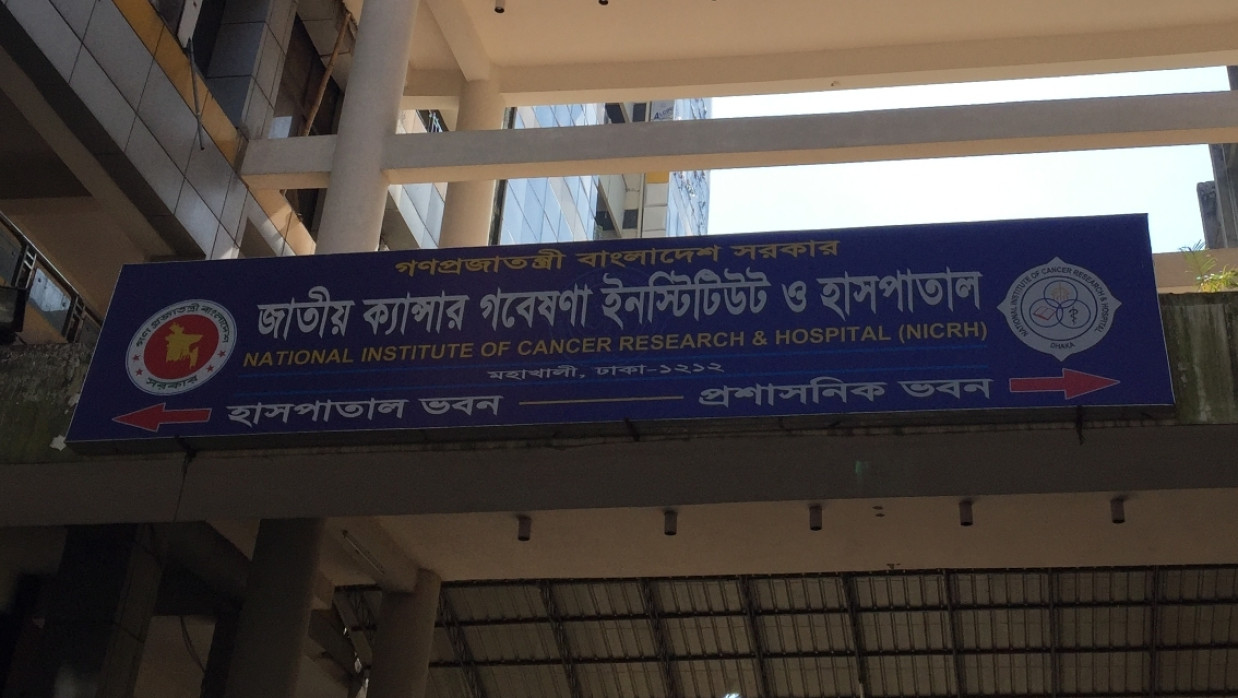
A backlog of around 7,500 cancer patients has pushed radiotherapy waiting dates at the National Institute of Cancer Research and Hospital (NICRH) in Dhaka to October-November 2028, forcing the hospital to temporarily stop registering new patients for the service.
The country’s only specialised government cancer hospital is currently operating just two radiotherapy machines, with each being used to treat around 120 to 130 patients a day across three shifts, far above international standards, according to hospital officials.
The machines operate from 8am to midnight and together provide radiotherapy to around 250 to 300 patients a day. However, patients typically require daily treatment for four to six weeks, meaning the same patients continue to occupy machine capacity for an extended period.
Professor Dr Mostafa Aziz Sumon, director of NICRH, said the hospital had stopped giving new appointment dates after the waiting list reached 2028.
“Our dates have gone into 2028. Getting a date in 2028 made patients think they could at least wait until then. There is no point in giving a date for 2028. It is better to explain to them that if they have an alternative treatment option, they should take it. Why should we take responsibility for a patient dying after giving them a date until 2028? That is why we have stopped giving dates. We are writing that there is no opportunity for radiotherapy.”
Two machines carry entire workload
NICRH has seven bunkers for radiotherapy machines, including five for linear accelerators (LINACs) and two for cobalt-60 machines. At one point, six machines were operational. By 2024, however, all six had become non-functional, resulting in a complete suspension of radiotherapy services for around one and a half months. Two new machines were made operational on February 4, 2025, and these are currently providing the hospital's radiotherapy services.
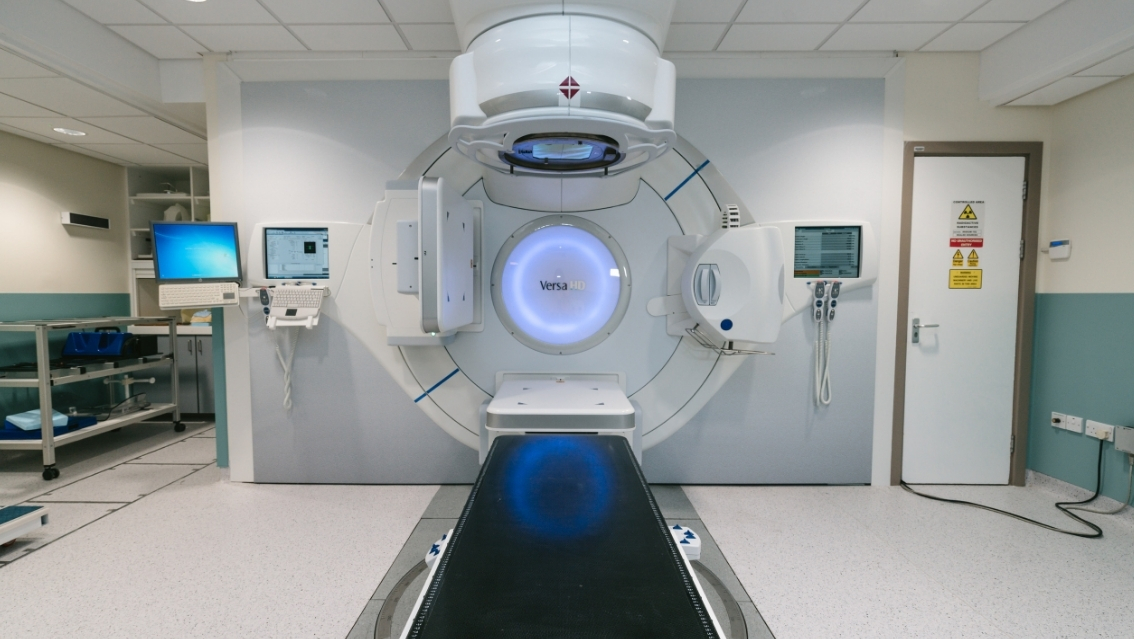
A standard radiotherapy session generally takes 15 to 30 minutes, including positioning the patient and administering radiation. Under normal conditions, a machine can treat around 25 to 40 patients in a shift.
According to standards of the World Health Organization (WHO) and International Atomic Energy Agency (IAEA), a LINAC can generally provide quality treatment to around 25 to 40 patients a day. In Bangladesh, because of the unusually high patient load, treating up to 60 to 70 patients per machine in two shifts is considered a tolerable limit.
NICRH, however, is operating its two machines in three shifts, with each machine treating around 120 to 130 patients a day.
“Treatment for one patient takes four to six weeks. So those 250 patients from one day continue receiving treatment for six weeks. New patients cannot be taken during this period. That is where the challenge is,” Dr Sumon said.
High cost drives patients to government hospital
Hospital officials say the huge difference in treatment costs between public and private facilities is a major reason for the pressure on NICRH.
Dr Toufiq Hasan Firoz, assistant professor in the hospital’s oncology department and project director of the government project to establish cancer, kidney and heart-care centres in eight divisions, said a 15-fraction breast cancer radiotherapy package costs around Tk 150,000 at private hospitals.
At NICRH, he said, the same treatment costs Tk 12,600.
“A 15-fraction breast cancer radiotherapy package costs around Tk 150,000 at a private hospital, while the same treatment at the National Institute of Cancer Research costs only Tk 12,600. That is nearly 10 times higher. Because of this huge difference in cost, low- and middle-income patients rely entirely on this hospital. At the same time, the shortage of radiotherapy machines in government hospitals is further increasing the crowd here.”
Hospital sources estimate that between 160,000 and 200,000 new cancer patients are diagnosed in Bangladesh every year. Around 40,000 to 45,000 of them seek treatment at NICRH.
Officials also point to the shortage of radiotherapy facilities nationwide. According to the figures cited by the hospital, Bangladesh needs at least 200 radiotherapy machines but has only around 35 across the public and private sectors, including just six in government facilities.
NICRH was established in 1982 and later moved to its present location in Mohakhali. Inpatient services began in 1991 with 50 beds. The hospital was subsequently expanded to 300 beds and later to 500 beds.
Director criticises past investment
Dr Sumon said the country's radiotherapy sector had suffered from prolonged underinvestment. He also criticised the previous Awami League government over what he described as inadequate development of cancer treatment, dialysis and organ transplantation.
“The situation in radiotherapy is completely disastrous. In reality, for the past 17 years, this subject was completely neglected so that patients would go to India. Apart from cancer, there is dialysis and organ transplantation. There was no development in these two areas either, so that patients would go to India. At one point, organ transplantation itself stopped. Otherwise, so many patients from Bangladesh would not be going to India today.”
More machines planned
NICRH officials say increasing the number of radiotherapy machines is essential to reduce the backlog. One additional machine is currently being procured with government funding and could be ready by January, Dr Sumon said. A tender process is underway to procure a fourth machine, which he expects could be operational by April or May.
The hospital also plans to remove the obsolete machines from its remaining three unused bunkers and install new equipment. Dr Sumon said the hospital aims to have six radiotherapy machines operational during the 2027-28 fiscal year.
A radiotherapy machine is also expected to be installed at Kurmitola Multicare Hospital by January and operated under NICRH, he said. In addition, two radiotherapy machines at the Institute of Nuclear Medical Physics (INMP) in Savar, which are primarily used for research, are being used to provide patient services under the hospital.
He expects these measures to substantially reduce the current backlog within two to two and a half years.
Eight divisional centres under development
The government is also nearing completion of a project to establish a specialised hospital in each of Bangladesh’s eight divisions for cancer, kidney and heart disease treatment.
Each divisional hospital will have 182 beds for cancer patients, while at least two radiotherapy machines are initially planned for each facility, according to Dr Firoz.
“If we can provide services to at least 150 patients with two machines, the eight divisions can provide services to 1,200 patients. That would reduce the pressure considerably, although it is still much lower than our expectations. In reality, even if we consider a population of 18 crore, we need at least 180 radiotherapy centres in the country.”
The proposed expansion is intended to increase treatment capacity outside Dhaka while reducing the dependence of patients from across the country on NICRH.
 Follow The Daily Campus on Google News